CAMEO 2025 Annual Retreat
On September 12 the CAMEO Annual Retreat was held at Cornell University. CAMEO members and trainees gathered for a day long program. Sessions included discussions of bridging academia and industry to advance orthopaedic research and moving from discovery to treatment to reduce the burden of sketal disease. Partipants toured new Biomedical Engineering instructional facilities and Cornell’s College of Veterninary Medicine research facilities.

CAMEO trainees award winners at OREF 5th Annual National Resident Research Symposium
Congratulations to CAMEO NIH T32 fellows, Julia Retzky, MD and Sreetha Sidharthan, MD on winning awards at the OREF 5th Annual National Resident Research Symposium.
Julia Retzky, MD was selected as the 2025 OREF National Resident Research Symposium Champion for her paper Early Anterior Cruciate Ligament Reconstruction Mitigates the Development of Post-Traumatic Osteoarthritis in a Murine Anterior Cruciate Ligament Rupture Model.
Sreetha Sidharthan, MD was also a national award winner as a top scoring resident for her paper Reverse-Anatomical Front and Back Reconstruction for Volar Intercalated Segment Instability Non-Dissociative: A Biomechanical Study.
Bonassar Lab awarded Best Poster Awards at 2025 ORS
Larry Bonassar’s research group was awarded two best poster awards at the 2025 Annual Meeting of the Orthopeadic Research Society Annual Meeting.
Best Poster award for the Preclinical Models section was awarded to Kristyna Hargitaiova , Melia Matthews , Salman Matan, Andrew Miller, Sarah Pownder, Lawrence Bonassar, and Michelle Delco for “A New Ovine Combined Cartilage Injury Model for Investigating Cartilage Repair”
Best Poster award for the Meniscus section was awarded to Carlos Urrea de la Puerta, Lara Estroff, and Lawrence Bonassar for “BMP-2 Induces Dose-Dependent Hypertrophy in Fibrochondrocytes for Meniscal Enthesis Tissue Engineering”
Bonassar recipient of 2024 Urist Award from ORS
Larry Bonassar has been selected to receive the 2024 Marshall Urist Award from the Orthopaedic Research Society.
The Marshall Urist award honors an investigator in tissue regeneration research who has a sustained ongoing body of focused research in the area of tissue regeneration as it relates to the musculoskeletal system. Dr. Bonassar received the award at the February meeting of the ORS.
Marjolein van der Meulen awarded H.R. Lissner Medal
Marjolein van der Meulen has been selected to receive the 2024 H.R. Lissner Medal by the American Society of Mechanical Engineers (ASME). The award recognizes outstanding achievements in the field of bioengineering in research, education and service to the bioengineering community.
Moridi selected to be TMS Early Career Faculty Fellow
Professor Atieh Moridi has been awarded a 2024 Minerals, Metals and Materials Society (TMS) Early Career Faculty Fellow Award. The award recognizes “an assistant professor for his or her accomplishments that have advanced the academic institution where employed, and for abilities to broaden the technological profile of TMS.” Awardees are evaluated based on their personal achievements and ability to broaden the existing technological profile of the society, among other qualifications.
Bonassar, Putnam and Reesink awarded $2 million grant from National Science Foundation
Developing a new generation of biosynthetic lubricants
CAMEO members Dr. Lawence J. Bonassar, Daljit S. and Elaine Sarkaria Professor in the Meinig School of Biomedical Engineering and the Sibley School of Mechanical and Aerospace Engineering, David Putnam, Professor in the Meinig School of Biomedical Engineering and Smith School of Chemical and Biomolecular Engineering and Dr. Heidi Reesink, associate professor in the Department of Clinical Sciences at the College of Veterinary Medicine at Cornell University are part of an interdisciplinary team that has been awarded a grant for $2 million under the National Science Foundation’s Leading Engineering for America’s Prosperity, Health and Infrastructure program (LEAP HI). The goal of the award is to develop a new generation of biosynthetic lubricants that have the potential to treat arthritis and reduce the painful friction of artificial joints.
7th Annual Cornell BME MEng Industry Engagement Day
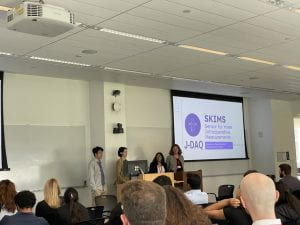
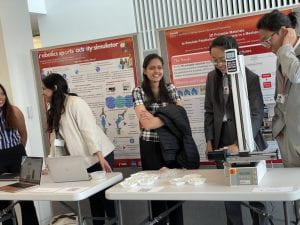
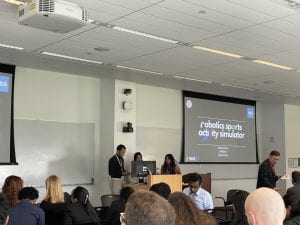
Cornell Biomedical Engineering Master of Engineering students engage in yearlong design projects with an emphasis on the identification or validation of unmet clinical needs, this year several of these projects were with done in collaboration with surgeons and researchers at the Hospital for Special Surgery and were featured at the 7th annual Cornell BME MEng industry engagement day and project showcase. The showcase allowed students to present their work and engage with faculty, alumni and professionals.
Bonassar recipient of the ORS 2023 Outstanding Achievement in Mentoring Award
Dr. Lawence J. Bonassar, the Daljit S. and Elaine Sarkaria Professor in the Meinig School of Biomedical Engineering and the Sibley School of Mechanical and Aerospace Engineering at Cornell University, has been announced as the recipient of the Orthopaedic Research Society 2023 Outstanding Achievement in Mentoring Award.
Andarawis-Puri and Rodeo awarded Cornell Engineering SPROUT Award to study tendon injuries
Nelly Andarawis-Puri (PI), Scott Rodeo (Co-I), Cindy Leifer (Co-I), Nozomi Nishimura (Co-I); Iwijn De Vlaminck (Co-I) have been awarded a $75,000 Cornell Engineering Sprout Award to study tendon injuries. Cornell Engineering Sprout Awards provide seed funding to support teams of investigators pursuing novel research at the intersection of multiple fields with a goal of being able to submit the work to outside funding agencies.
The proposed studies are to determine the damage component that is lacking in sub-rupture injuries to mount the necessary inflammatory response by using precise laser ablation to differentiate between the effect of matrix micro-rupture and cellular necrosis. They also utilize cell-free RNA profiling of different tendon injuries in their mouse injury model and in human samples to make a leap towards managing each injury based on its environment. This first aspect alone is highly impactful because of the potential clinical translation of precisely employed laser ablation to promote healing of overuse tendon injuries. In addition, the search for biomarkers that are indicative of onset of tendon injuries has been an unattainable target. The investigative team is uniquely positioned to identify circulating cell-free RNA signatures of different tendon injuries, and test the findings in human subjects, thereby pioneering a non-invasive mechanism to diagnose onset of tendon injuries to tailor treatment.